

The hoisting mechanism of a truck crane is a complex and crucial part of this powerful piece of construction equipment. As a prominent supplier of truck cranes, I am excited to delve into the details of this mechanism, explaining its components, working principles, and importance in the overall operation of the crane.
Components of the Hoisting Mechanism
The hoisting mechanism of a truck crane consists of several key components, each playing a vital role in the lifting process.
1. Winch
The winch is the heart of the hoisting mechanism. It is a device that winds and unwinds the wire rope to lift and lower the load. The winch is typically powered by an electric motor or a hydraulic system. In modern truck cranes, hydraulic winches are more commonly used due to their high power - to - weight ratio and better control capabilities. The winch drum is where the wire rope is wound. The size and capacity of the winch drum determine the maximum length of the wire rope that can be used and, consequently, the maximum lifting height of the crane.

2. Wire Rope
The wire rope is the medium through which the load is lifted. It is made up of multiple strands of steel wires twisted together, providing high strength and flexibility. The wire rope must be carefully selected based on the crane's lifting capacity and the type of load it will be handling. Different types of wire ropes have different characteristics, such as resistance to abrasion, fatigue, and corrosion. Regular inspection and maintenance of the wire rope are essential to ensure its safety and reliability.
3. Hook Block
The hook block is attached to the end of the wire rope and is used to connect the load. It consists of one or more pulleys (sheaves) that help to change the direction of the wire rope and reduce the force required to lift the load. The hook block also has a safety latch to prevent the load from accidentally disengaging from the hook. The number of sheaves in the hook block can affect the mechanical advantage of the hoisting system, with more sheaves providing a greater mechanical advantage but also increasing the complexity of the system.
4. Brake System
The brake system is a critical safety component of the hoisting mechanism. It is designed to hold the load in place when the winch is not operating and to stop the load from falling in case of a power failure or other emergency. There are two main types of brakes used in truck crane hoisting mechanisms: mechanical brakes and hydraulic brakes. Mechanical brakes use friction to stop the rotation of the winch drum, while hydraulic brakes use hydraulic pressure to apply the braking force.
Working Principles of the Hoisting Mechanism
The working principle of the hoisting mechanism is based on the conversion of energy. When the operator activates the hoisting control, power is transmitted to the winch. In a hydraulic winch system, hydraulic fluid is pumped into the hydraulic motor, which then rotates the winch drum. As the winch drum rotates, the wire rope is wound or unwound, depending on the direction of rotation.
When lifting a load, the winch winds the wire rope onto the drum, causing the hook block and the attached load to rise. The mechanical advantage provided by the hook block and the pulley system reduces the amount of force required to lift the load. When lowering the load, the winch unwinds the wire rope, allowing the load to descend at a controlled speed. The brake system ensures that the load can be stopped at any time during the lifting or lowering process.
Importance of the Hoisting Mechanism
The hoisting mechanism is the most important part of a truck crane as it directly determines the crane's ability to lift and move heavy loads. A well - designed and properly maintained hoisting mechanism ensures the safety and efficiency of the crane operation.
Safety is of utmost importance in crane operations. A reliable hoisting mechanism with a good brake system can prevent accidents such as load drops, which can cause serious damage to property and endanger the lives of workers. Efficiency is also crucial, as a fast and smooth hoisting process can increase the productivity of construction projects.
Different Types of Truck Cranes and Their Hoisting Mechanisms
There are various types of truck cranes, each with its own characteristics and hoisting mechanisms.
1. Mobile Crane
A 50 Ton Mobile Crane is a type of truck crane that is highly mobile and can be easily transported to different job sites. Its hoisting mechanism is designed to provide high lifting capacity and flexibility. Mobile cranes often have telescopic booms, which can be extended to increase the lifting height and reach. The hoisting mechanism of a mobile crane needs to be able to handle the dynamic loads associated with the movement of the crane and the load.
2. Standard Truck Crane
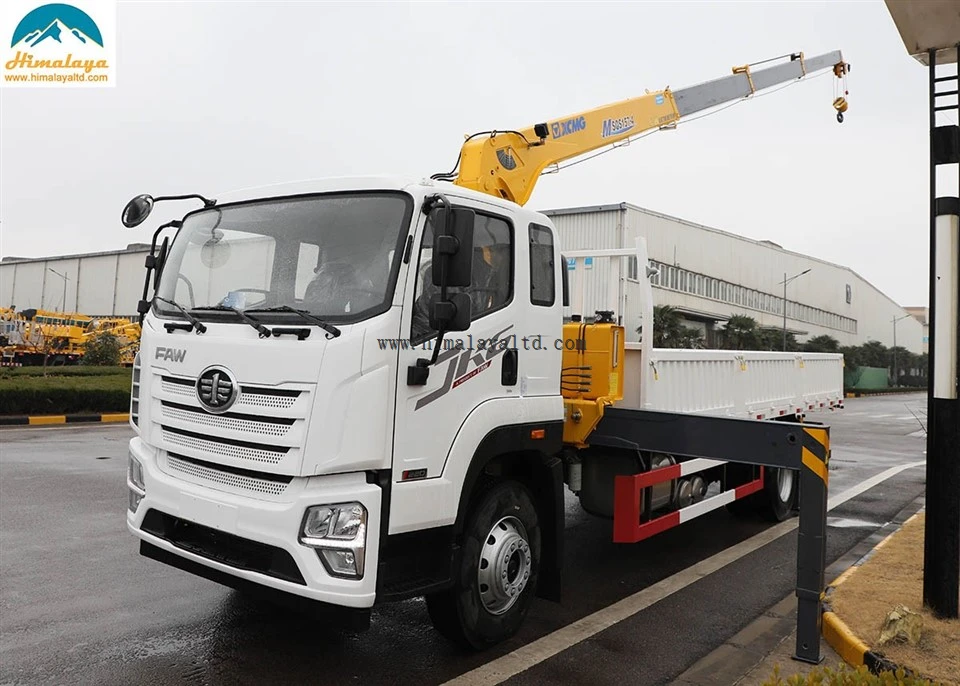
A Truck Crane is a more traditional type of crane that is mounted on a truck chassis. It is suitable for a wide range of lifting applications, from small - scale construction projects to large - scale industrial operations. The hoisting mechanism of a truck crane is designed to be robust and reliable, with a focus on providing consistent lifting performance.
3. Loader Crane
A Loader Crane is a type of truck - mounted crane that is often used for loading and unloading goods. Its hoisting mechanism is designed to be fast and efficient, allowing for quick handling of loads. Loader cranes usually have a more compact design and are suitable for use in confined spaces.
Maintenance and Inspection of the Hoisting Mechanism
Proper maintenance and inspection of the hoisting mechanism are essential to ensure its safe and reliable operation. Regular maintenance includes lubricating the moving parts, checking the tightness of bolts and nuts, and inspecting the wire rope for signs of wear and damage.
Inspection of the hoisting mechanism should be carried out at regular intervals. This includes checking the brake system for proper operation, testing the hydraulic system for leaks and pressure, and inspecting the hook block and sheaves for any signs of damage. Any issues found during the inspection should be addressed immediately to prevent further damage and ensure the safety of the crane operation.
Conclusion
The hoisting mechanism of a truck crane is a complex and essential part of the crane. Understanding its components, working principles, and importance is crucial for anyone involved in crane operations. As a supplier of truck cranes, we are committed to providing high - quality cranes with reliable hoisting mechanisms.
If you are in the market for a truck crane or have any questions about our products, we encourage you to contact us for a detailed discussion. Our team of experts is ready to assist you in selecting the right crane for your specific needs and to provide you with the best possible service.
References
- Construction Equipment Handbook. McGraw - Hill.
- Crane Safety Standards and Guidelines. Occupational Safety and Health Administration (OSHA).
- Hydraulic Systems in Mobile Equipment. Elsevier.


